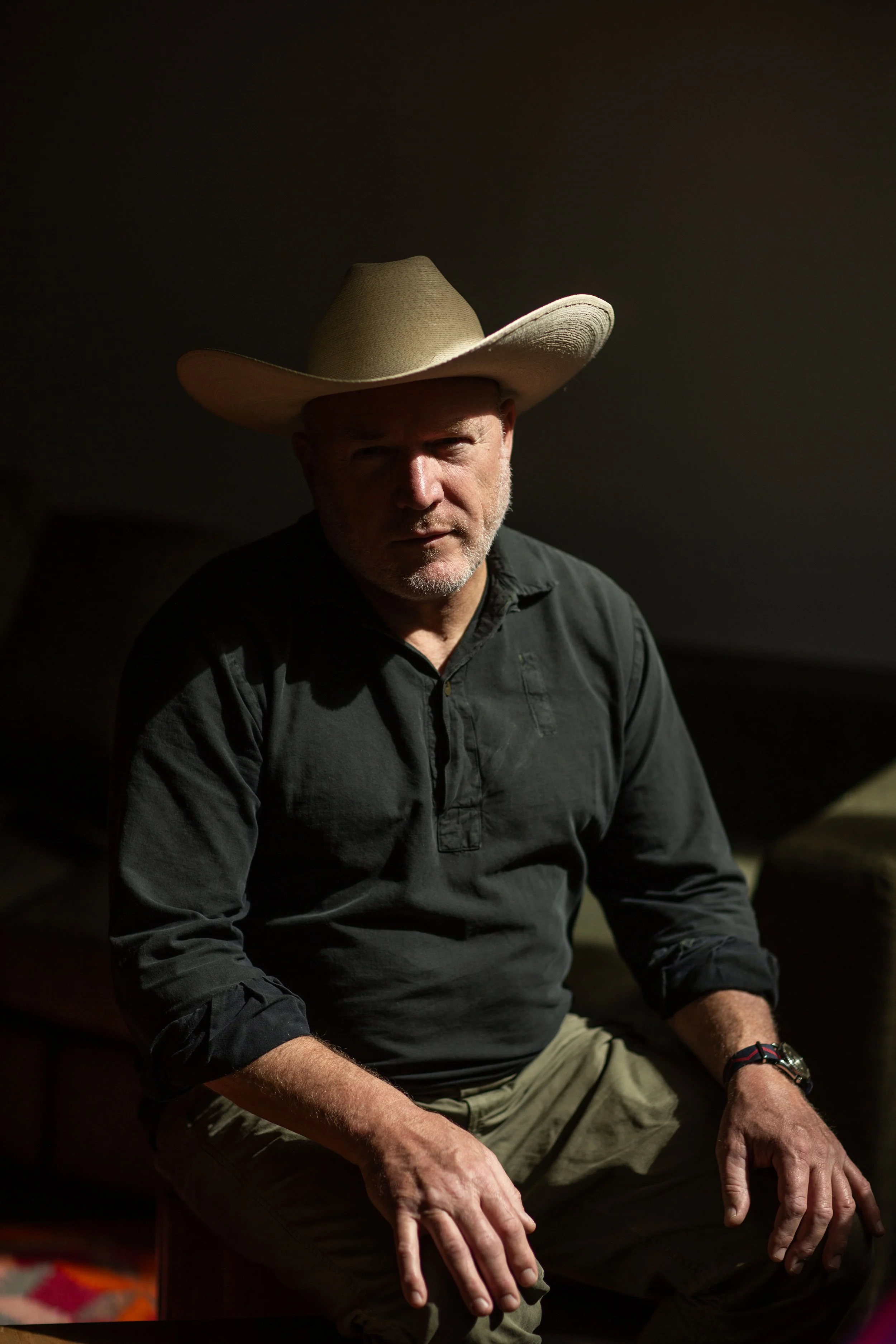
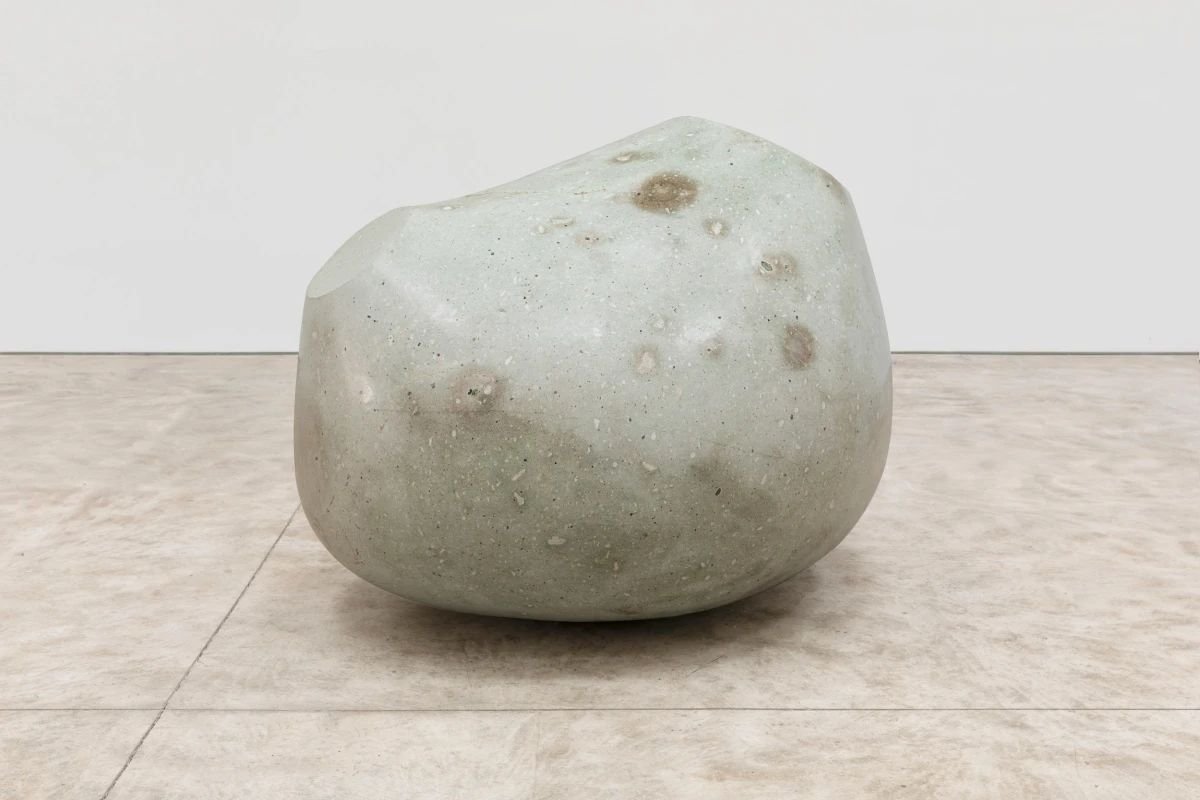
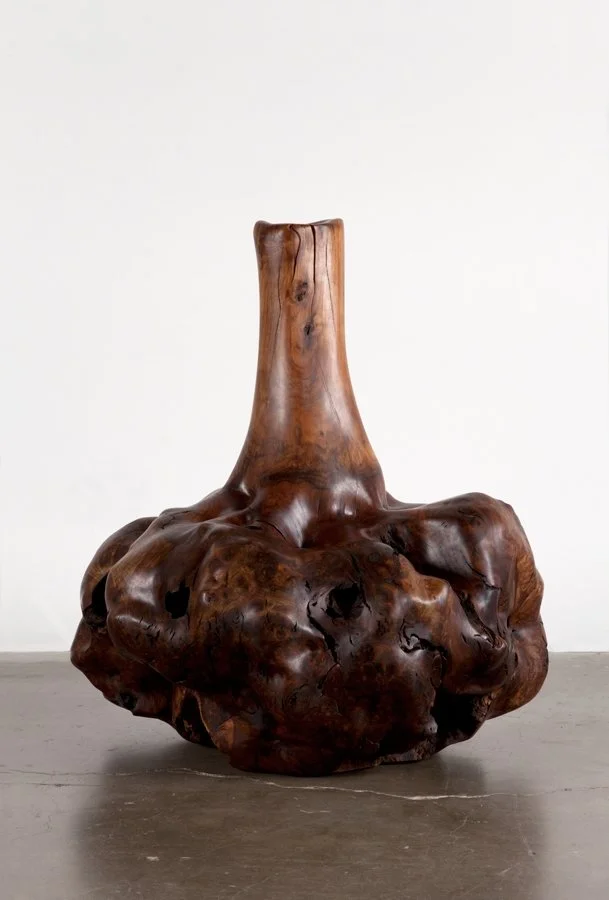
Alma Allen (b. 1970, Salt Lake City, UT) works in a wide range of materials, including bronze, parota wood, various types of marble, obsidian, and stalagmite. His sculptures retain a strikingly unique energy and original aesthetic. From sinuously thin bronze shapes to magmatic and smooth marble outpourings, Allen’s biomorphic forms seem to rise up effortlessly from the artist’s chosen material. Allen’s artistic trajectory has seen him progress from humble origins, selling hand-carved miniatures on the streets of SoHo in New York City, to his breakthrough moment of recognition after his acclaimed presentation at the 2014 Whitney Biennial.
Reflecting a largely self-taught background, the spontaneity and energy of Allen’s work seem to bear little connection to the artistic movements of his time. In fact, they have more in common, formally and perhaps spiritually, with the vast expanses of territory and the monolithic natural formations that have informed his life: Utah, where he was born and raised; Joshua Tree, California, where he lived for several years; and Tepoztlán, Mexico, where his studio is currently located. Rocks, branches, and unspecified biomorphic entities exude an almost prehistoric energy, their size and mass undermined by their apparent levity and effortless presence.
Allen’s work has been exhibited in numerous international museums, including the Whitney Museum of American Art, New York; the Aldrich Contemporary Art Museum, Ridgefield, Connecticut; and the Museo Anahuacalli, Mexico City. Most recently, the artist was awarded the Park Avenue sculpture exhibition in New York City by the Sculpture Committee of the Fund for Park Avenue and the New York City Department of Parks and Recreation’s Art in the Parks program. Alma Allen’s work is in the permanent collections of several public institutions, among them the Los Angeles County Museum of Art and the Palm Springs Art Museum in California.