United States Pavilion 61st International Art Exhibition La Biennale di Venezia
Alma Allen: Call Me the Breeze
by Jeffrey Uslip, Curator, United States Pavilion
Alma Allen’s biomorphic sculptures evoke the visceral realities of contemporary life and reveal the fragility of the human condition. The expansive environments and landscapes in which Allen has lived and worked have shaped his points of view, developed his sculptural vocabulary, and informed how he moves through the world. Inspired by the natural geological formations of the Americas, Allen has created a corpus of work that highlights the alchemical transformation of matter: the strata of rough rock appear smoothed through the passage of time, and solid bronze occurs as liquid. Call Me the Breeze, the official United States Pavilion for the 61st International Art Exhibition, explores the concept of elevation, both as a physical manifestation of form and as a symbol of self-realization.
For over three decades, Allen has developed a hybrid process that combines preindustrial methods of carving and hand-shaping with advanced technology, such as robotic sculpting. With a commitment to material authenticity, Allen consistently and methodically works in matter local to the Americas, including American walnut burl and Oaxacan Cantera verde. Call Me the Breeze features six stone sculptures that incorporate two varieties of Mexican onyx, Guatemalan green quartzite, Mexican black marble, and Persian travertine, as well as Colorado Yule marble, a luminous white stone that has been used to construct several of our nation’s historic monuments, including the Lincoln Memorial in Washington, DC.
Allen’s sculptures function as “actants” that generate meaning, rather than artifacts that illustrate a fixed idea. As actants, Allen’s works are not passive objects to interpret; instead, they open dialogues and foster discourse. The artist’s “Not Yet Titled” forms operate, rather than represent. Each work in Call Me the Breeze is both sphinx and chimera; the sculpture’s material lightness of being offers poignant clues to multiple meanings; beneath their disarming buoyancy lies profound conceptual, artistic, and philosophical depth.
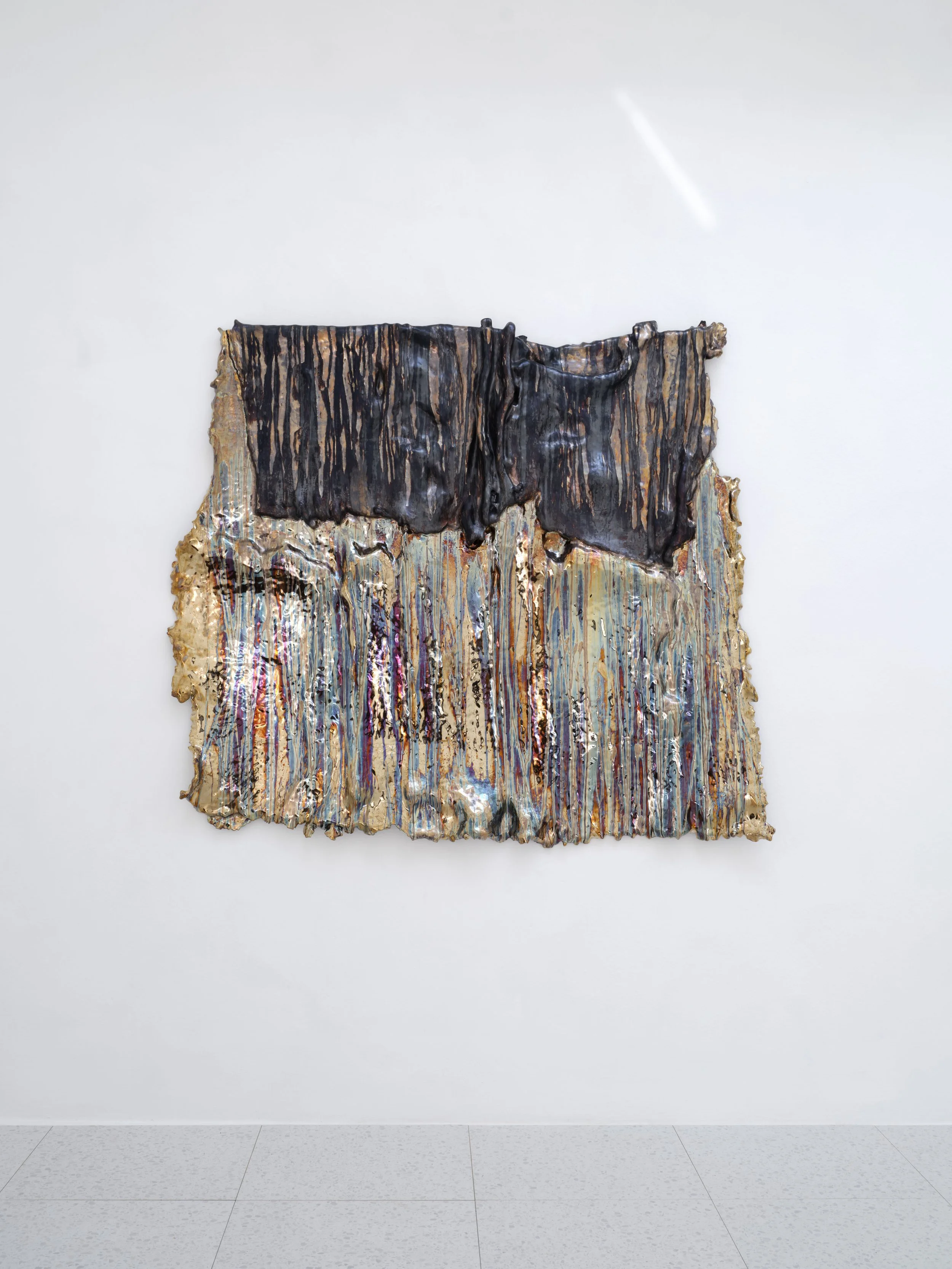
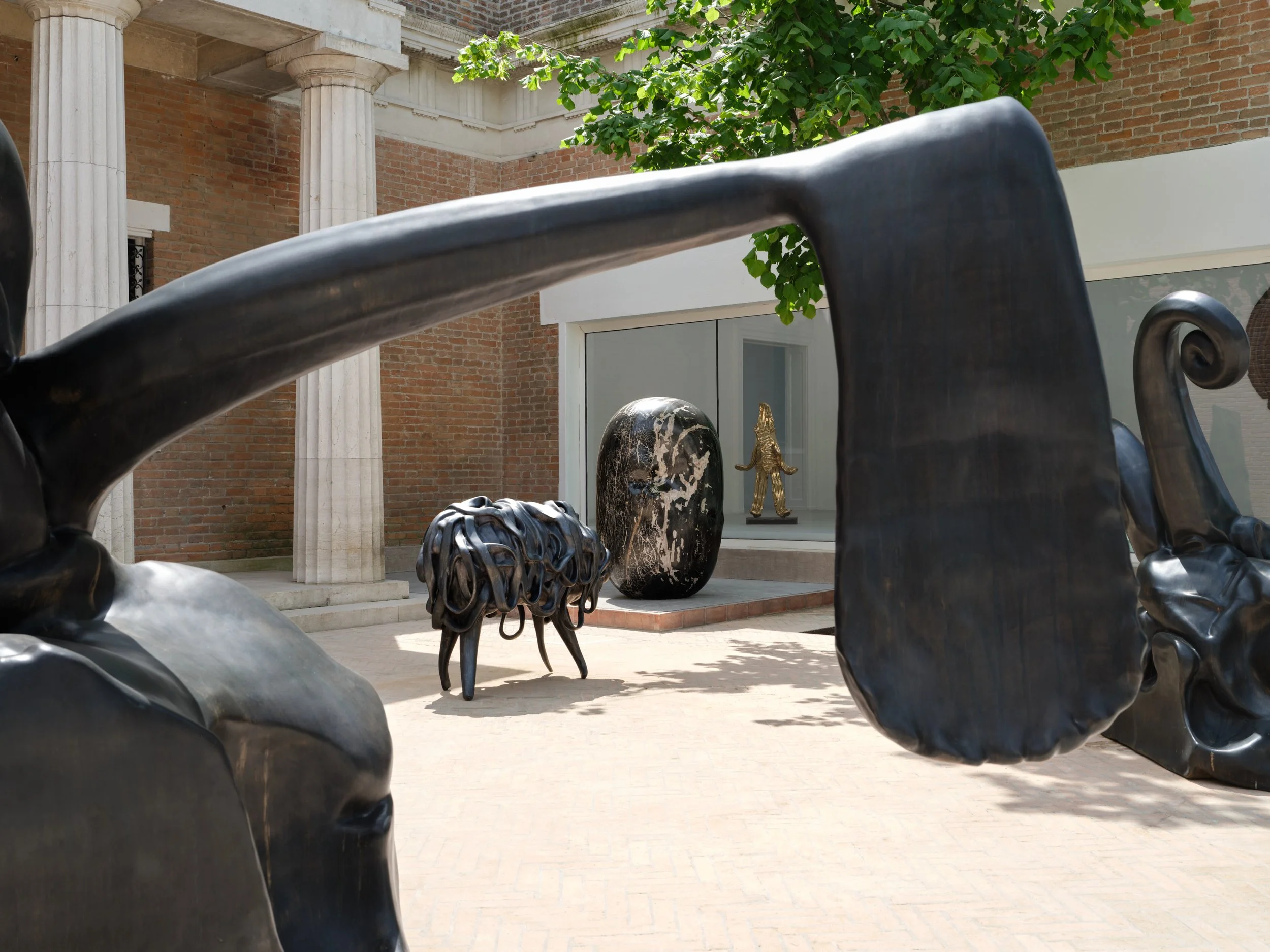
For example, the exhibition presents an asterism of sculptures in the pavilion’s forecourt that suggest the perils faced by an unsheared sheep when courageous enough to stray from the flock, and a polished bronze wall relief—an Eye of Providence—whose meaning oscillates between divine protection and surveillance. The pavilion’s iconic rotunda gallery features a monumental, totemic figure whose form, evocative of both Our Lady of Guadalupe and a saguaro, welds the worldly with the divine. Elsewhere in the galleries, beholders are faced with an allegorical choice between an open portal and a closed door; viewers will encounter a bronze figure of a young person witnessing “the terror of war” and will experience a sculpture made of walnut burl, which is, in essence, a tree’s response to trauma, manifested as arboreal scar tissue. Taken as a whole, the exhibition is an opportunity to be our future selves in the present.
For Allen, “The sculptures are often in the act of doing something: They are going away, or leaving, or interacting with something invisible. Even though they seem static as objects, they are not static in my mind. In my mind, they are part of a much larger universe.” It is precisely this “counter-temporal” quality that prevents Allen’s work from being paraphrased as monument or message. Call Me the Breeze is a proposal for self-reflection, renewal, and unity. The landscape has a way of slowing things down, recalibrating scale, expanding perception, and offering perspective.
We are at a critical moment in culture: as the nation approaches its semiquincentennial, celebrating the 250th anniversary of the signing of the Declaration of Independence, the United States Pavilion champions art that favors deep time, eschews finite positions, and encourages artistic autonomy and curatorial independence. Allen’s sculpture, like all allocentric art, is decidedly present and a cipher for the future. The artist’s signature visual vocabulary provides the ground for “the Allocene”—a proposal for art that embodies a state of alterity, weightlessness, and freedom of thought: Matter, time, and landscape are co-authors of meaning.