
The American Arts Conservancy Announces Alma Allen as the United States Representative for the 2026 Venice Biennale
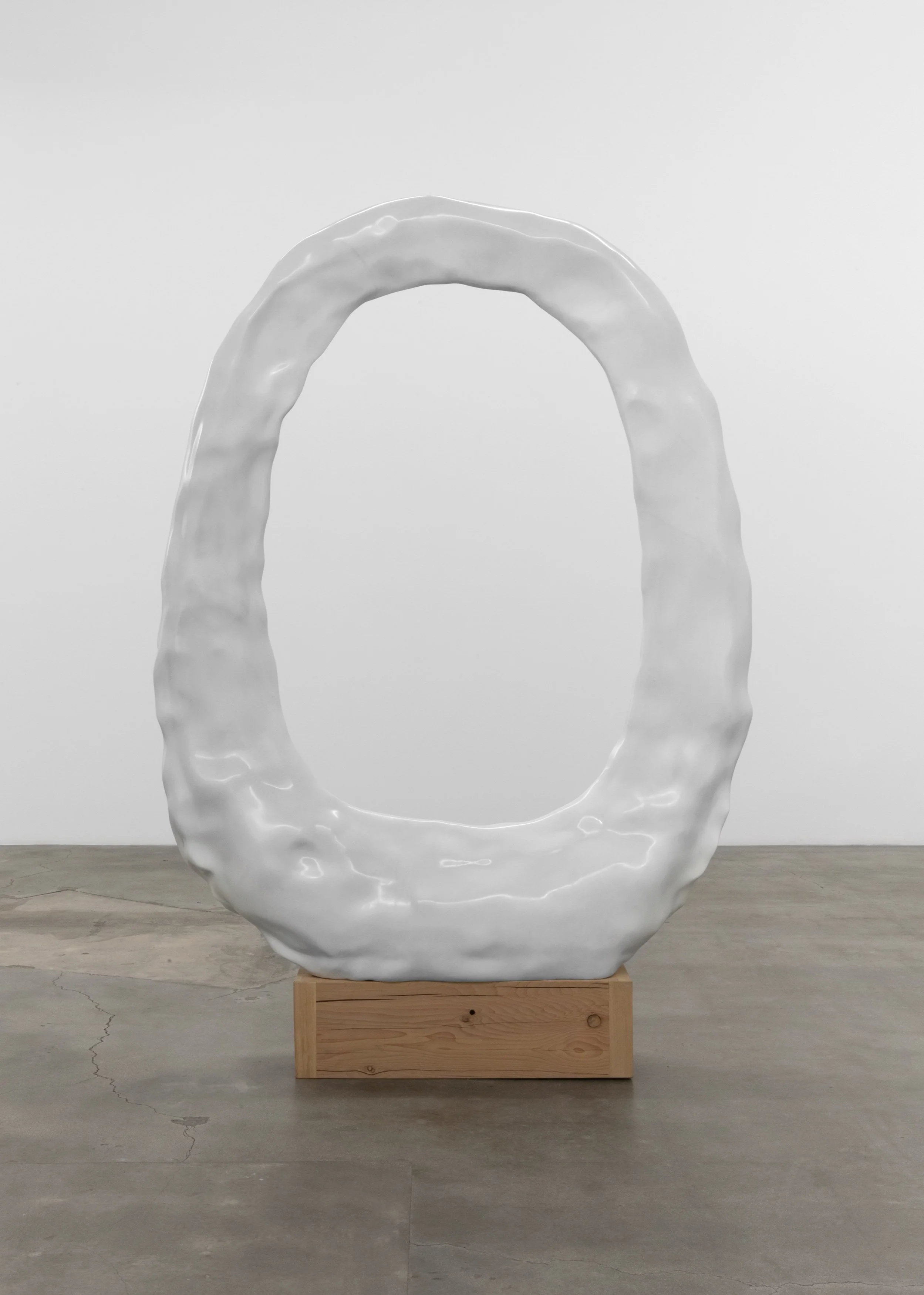
Image: Alma Allen, Not Yet Titled, 2014. Yule marble and cedar pedestal; 81 x 63 x 14 in. (205.7 x 160 x 35.6cm), pedestal: 10 x 34 3/4x 12 in. (25.4 x 88.3 x 30.5 cm). Courtesy of the artist. All rights reserved.
(Washington, DC—November 24, 2025) The American Arts Conservancy (AAC), is pleased to announce, in collaboration with the U.S. Department of State, that Alma Allen will represent the United States at the 2026 Venice Biennale. Over the past three decades, Allen has created abstract biomorphic sculptures inspired by the expansive landscapes and natural geological formations of the Americas, using natural materials sourced from these lands. His exhibition, Alma Allen: Call Me the Breeze, on view May 9–November 22, 2026, at the United States Pavilion in Venice, Italy, will present artworks that highlight Allen’s alchemical transformation of matter and explore the concept of “elevation,” both as a physical manifestation of form and as a symbol of collective optimism and self-realization. The artist will create several new site-responsive sculptures, including one for the U.S. Pavilion’s outdoor forecourt.
To make his work, Allen developed a hybrid process that combines preindustrial methods of carving and hand- shaping with advanced technology, such as robotic sculpting. With a commitment to material authenticity, he works in materials local to the Americas, including American walnut burl; Cantera verde volcanic rock; and white Colorado Yule marble, a luminous stone used to construct several of our nation’s historic monuments, including the Lincoln Memorial in Washington, DC, and the Tomb of the Unknown Soldier at Arlington National Cemetery. Natural materials carry historical and cultural imports; Yule marble, for example, signifies historical gravity and transcendence and can be used to foster understanding and to open a metaphorical pathway for the future.
With these natural, earthbound materials as a starting point, Allen has built a body of sculptures that seem to transform the nature of matter. In Alma Allen: Call Me the Breeze, viewers will encounter works in which the strata of rough rock appear to have been smoothed through the passage of time, and solid bronze appears liquid. For Allen, “The sculptures are often in the act of doing something: They are going away, or leaving, or interacting with something invisible. Even though they seem static as objects, they are not static in my mind. In my mind, they are part of a much larger universe.”
The U.S. Pavilion at the 61st International Venice Art Biennale will coincide with “America 250,” the United States Semiquincentennial celebrating the 250th anniversary of the signing of the Declaration of Independence. The 2026 U.S. Pavilion is organized by Commissioner Jenni Parido, founder of the American Arts Conservancy, and curator Jeffrey Uslip.
“It is an honor to celebrate the American sculptor Alma Allen as the artist to represent the United States,” said Jenni Parido. “Alma Allen embodies the qualities of America’s best and brightest; he is a self-taught American success story, and the American Arts Conservancy is proud to share his work with audiences from around the world at the next Venice Biennale.”
“Alma Allen’s signature sculptural vocabulary brings the art historical legacies of biomorphism into our present; Allen’s work functions as sculptural ciphers: each sculpture, decisively Not Yet Titled, is in a conceptual state of becoming” said Uslip. “Alma Allen has spent the last thirty years creating forms that are sculpturally captivating and materially grounded in the landscape of the Americas. As the exhibition’s title, Call Me the Breeze, suggests, Alma Allen’s sculptures embrace a weightlessness and freedom of thought.”
BIOGRAPHIES
Alma Allen
U.S. Pavilion Artist
Alma Allen (b. 1970, Salt Lake City, UT) works in a wide range of materials, including bronze, parota wood, various types of marble, obsidian, and stalagmite. His sculptures retain a strikingly unique energy and original aesthetic. From sinuously thin bronze shapes to magmatic and smooth marble outpourings, Allen’s biomorphic forms seem to rise up effortlessly from the artist’s chosen material. Allen’s artistic trajectory has seen him progress from humble origins, selling hand-carved miniatures on the streets of SoHo in New York City, to his breakthrough moment of recognition after his acclaimed presentation at the 2014 Whitney Biennial.
Reflecting a largely self-taught background, the spontaneity and energy of Allen’s work seem to bear little connection to the artistic movements of his time. In fact, they have more in common, formally and perhaps spiritually, with the vast expanses of territory and the monolithic natural formations that have informed his life: Utah, where he was born and raised; Joshua Tree, California, where he lived for several years; and Tepoztlán, Mexico, where his studio is currently located. Rocks, branches, and unspecified biomorphic entities exude an almost prehistoric energy, their size and mass undermined by their apparent levity and effortless presence.
Allen’s work has been exhibited in numerous international museums, including the Whitney Museum of American Art, New York; the Aldrich Contemporary Art Museum, Ridgefield, Connecticut; and the Museo Anahuacalli, Mexico City. Most recently, the artist was awarded the Park Avenue sculpture exhibition in New York City by the Sculpture Committee of the Fund for Park Avenue and the New York City Department of Parks and Recreation’s Art in the Parks program. Alma Allen’s work is in the permanent collections of several public institutions, among them the Los Angeles County Museum of Art and the Palm Springs Art Museum in California.
Jenni Parido, Founder, The American Arts Conservancy
U.S. Pavilion Commissioner
Jenni Parido is the founder and Executive Director of The American Arts Conservancy (AAC), a nonprofit organization dedicated to preserving and advancing American art through diplomacy, education, and cultural stewardship. A strategist and preservationist, Parido leads initiatives that unite artists, institutions, and government partners in promoting dialogue through the visual arts and fostering understanding across borders. Under her leadership, AAC collaborates with leading museums and federal agencies, including a formal alignment with the U.S. Department of State’s Art in Embassies, to champion the preservation and presentation of American art on the world stage. Her leadership reflects a steadfast commitment to ensuring that art remains a vital expression of America’s cultural and diplomatic identity.
Jeffrey Uslip,
U.S. Pavilion Curator
For nearly three decades, Uslip has organized solo exhibitions with some of the most innovative and challenging artists of our time, including Hurvin Anderson, Mark Bradford, Lynda Benglis, Laurie Simmons, Joyce Pensato, Carla Klein, Hede Bühl, Barkley Hendricks, Kelley Walker, Leslie Hewitt, Michael Queenland, Igloolik Isuma Productions, Lisa Yuskavage, Katharina Fritsch, Joe Goode, Jesse Howard, and Agnes Denes. Uslip’s landmark exhibition Hurvin Anderson: Backdrop traveled to the Art Gallery of Ontario, Toronto, where it was shortlisted for the prestigious 2017 Turner Prize. In 2022 Uslip was co-curator of the Malta Pavilion at the 59th International Art Exhibition of La Biennale di Venezia. The exhibition, titled Diplomazija Astuta, featured artist Arcangelo Sassolino, who reimagined Caravaggio’s seminal altarpiece The Beheading of Saint John the Baptist as a kinetic sculptural installation that overlaid biblical narrative onto the present and resituated Caravaggio’s immanent themes within modern life.
ABOUT THE AMERICAN ARTS CONSERVANCY
The American Arts Conservancy is a nonprofit organization dedicated to preserving, promoting, and educating through the visual arts of the United States. Through cultural diplomacy, educational outreach, and archival stewardship, we advance the legacy of American artists at home and abroad. Our work connects communities, fosters dialogue, and ensures that American creativity continues to inspire across generations and borders.
ABOUT LA BIENNALE DI VENEZIA
Established in 1895, the International Art Exhibition of La Biennale di Venezia is considered the most prestigious contemporary art exhibition in the world, introducing hundreds of thousands of visitors to exciting new art every two years. The 61st International Art Exhibition of La Biennale di Venezia (May 9–November 22, 2026) is conceptualized by the late Koyo Kouoh.
ABOUT THE U.S. PAVILION
The United States Pavilion, a building in the neoclassical style in the Giardini della Biennale, Venice, opened on May 4, 1930. Since 1986, the U.S. Pavilion has been owned by the Solomon R. Guggenheim Foundation and managed by the Peggy Guggenheim Collection in Venice, which works closely with the U.S. Department of State and exhibition curators to install and maintain all official U.S. exhibitions presented in the Pavilion.
Past exhibitions can be viewed on the Peggy Guggenheim Collection’s website at https://www.guggenheim- venice.it/
ABOUT THE U.S. DEPARTMENT OF STATE’S BUREAU OF EDUCATIONAL AND CULTURAL AFFAIRS
The U.S. Department of State’s Bureau of Educational and Cultural Affairs (ECA) supports and manages official U.S. participation at the International Art and Architecture Exhibitions of La Biennale di Venezia. ECA designs and implements educational, professional, and cultural exchange and other programs that create and sustain the relationships with other countries necessary to advancing United States foreign policy goals. These exchange programs improve foreign relations and strengthen the national security of the United States, support U.S. international leadership, and provide a broad range of domestic benefits. For more information, please visit: state.gov/eca.
Media Contacts:
Ben Rawlingson Plant, Director BRP Consulting
brawlingsonplant@gmail.com
The American Arts Conservancy
Jenni Parido
press@americanartsconservancy.org
Office of Public Affairs and Strategic Communications
The U.S. Department of State’s Bureau of Educational and Cultural Affairs ECA-Press@state.gov
Additional images and portraits of the artist, commissioner, and curator are available upon request.
